
hilighter Logohilighter Logo
EN
Get Started
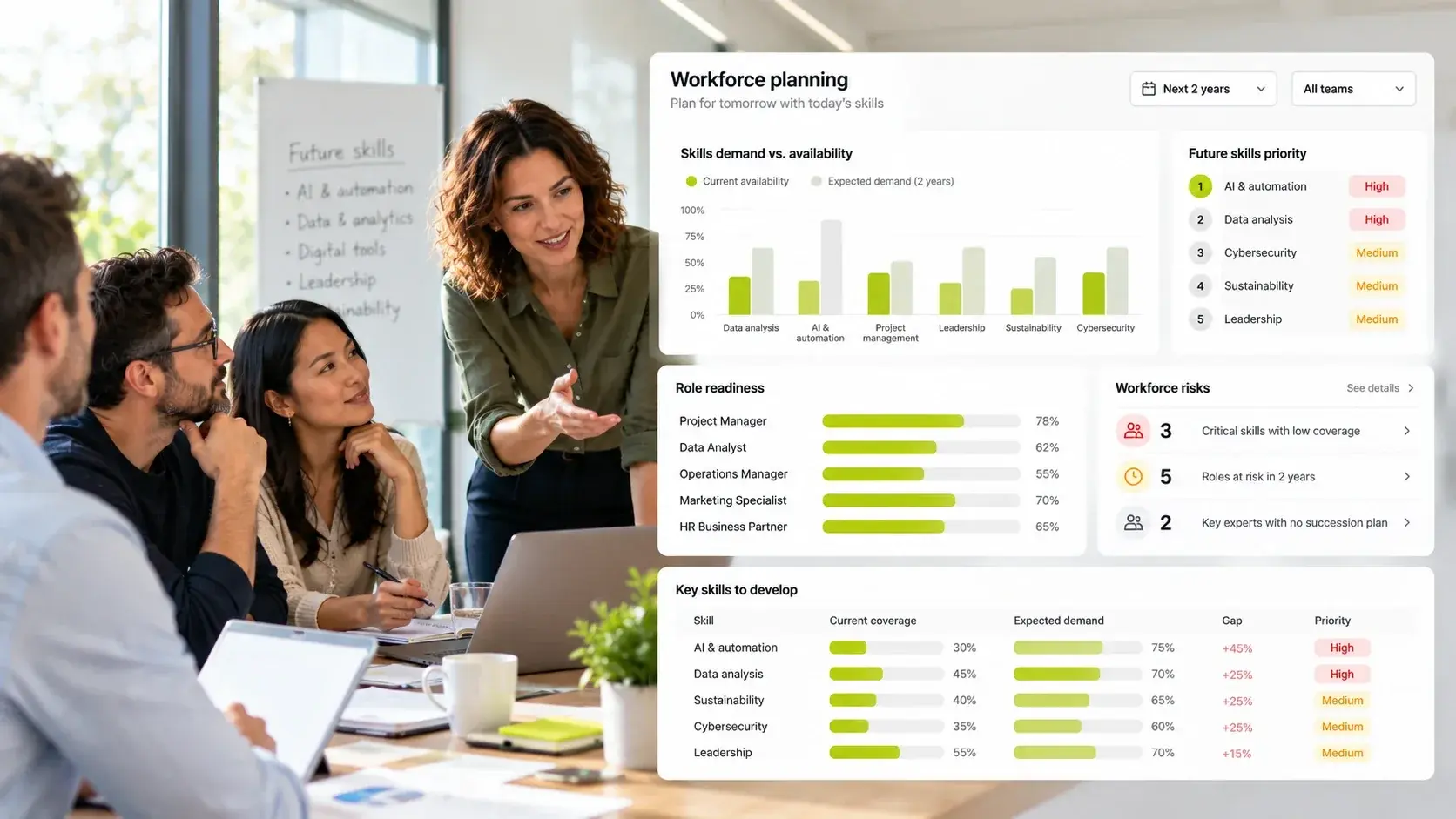
Professionals discussing workforce planning and future skills in a bright office

Workforce Planning & Future Skills

Premium module · Coming soon

Don’t Wait for Tomorrow’s Skills Gaps to Become Today’s Problems.

Your business is evolving. Your people’s skills need to evolve with it. New technologies, changing customer expectations, and shifting responsibilities are reshaping the capabilities organizations need.

hilighter helps you understand existing workforce skills, compare them with evolving role requirements, and identify where development deserves attention. Prepare your people for what’s next, starting with the skills you already have.

Your Next Business Challenge Could Be a Skills Challenge.

A new technology is introduced. A key employee leaves. Your organization launches a new service, or a team takes on new responsibilities. Suddenly you need skills you don’t have.

Many organizations plan budgets, products and technology without knowing whether their people can deliver.

The cost of a skills gap isn’t just missing expertise. It’s the opportunities you may be unable to pursue.

Build the Capabilities Your Organization Will Need Next

  1. 01

    Understand your starting point

    Build a structured picture of the skills and levels available today.

  2. 02

    Identify emerging skill requirements

    Clarify the capabilities that changing roles and responsibilities require.

  3. 03

    Spot potential gaps earlier

    Compare available skills with upcoming requirements and start preparing early.

  4. 04

    Focus on the right priorities

    Connect development with your actual organizational goals rather than every technology trend.

Connect Your Business Priorities with Your People’s Skills

  • Define future role requirements

    New tools, processes, regulations and customers change skill expectations.

  • Understand team capabilities today

    Review documented skills and proficiency levels.

  • Compare required versus available

    Highlight where skills align and where development may be needed.

  • Turn priorities into action

    Develop people, adapt responsibilities, or consider specialized recruitment or partners.

hilighter supports this planning with structured skills and role requirements. It does not predict the future for you.

From Future Challenges to Practical Skills Decisions

  1. 1

    Pick a change

    Identify a specific business change.

  2. 2

    Define the skills

    Define the skills the affected roles will require.

  3. 3

    Review today

    Review current employee and team capabilities.

  4. 4

    Set priorities

    Decide whether to develop, reorganize, recruit or work with partners.

  5. 5

    Revisit

    Update the requirements as plans evolve.

More proactive, skills-informed workforce decisions.

Practical Example: AI-Powered Customer Operations

A customer service operation plans to introduce AI tools next year. Its existing strengths are customer communication, service knowledge and problem-solving.

The emerging capabilities include AI literacy, evaluating generated answers, handling exceptions, interpreting data and adapting processes. By reviewing skills now, the manager can target training and assign practical activities ahead of the rollout.

AI skill requirements depend on the actual tools, processes and risks involved.

Tomorrow’s Skills Aren’t Just About AI

Digital & data

Data interpretation, digital tools, cybersecurity.

Human & leadership

Collaboration, judgment, adaptability and communication.

Sustainability & regulation

New environmental requirements and sector-specific skills.

Business transformation

Project management, new products, process improvement.

Don’t develop every possible skill. Develop the capabilities that matter to your strategy.

Workforce Planning Without the Complexity

SME leaders

Connect business changes to your team’s actual capabilities.

HR

Run structured conversations about current and future skills.

Department managers

Prepare for upcoming projects.

NGOs

Adapt to new tools and service models with limited resources.

You Don’t Need to Predict the Future to Prepare for It.

No one knows exactly which skills will be needed five years from now. Instead, ask: What do we have today? What are we likely to need next? What should we start developing?

hilighter supports these questions with structured skills and role requirements. The goal is better preparation, not magical prediction.

FAQs

What is skills-based workforce planning?

Comparing the capabilities you have with the ones your business objectives will require.

What are future skills?

Capabilities that may become more relevant as jobs and technology evolve.

How can SMEs start?

Start with one real priority, define the skills it needs, and review your current capabilities.

How will hilighter help?

This Premium module is in preparation. It builds on job and skills mapping, role requirements and proficiency levels, so you can compare what you have with what you need.

Does hilighter predict future skills automatically?

No. hilighter helps you structure and compare skills; deciding which skills you will need stays with you.

Must gaps always be solved by training?

No. Role design, recruitment and external partnerships may also be the right answer.

Is it available today?

Not yet. Workforce Planning & Future Skills is a Premium module in preparation, planned as an optional extension of paid plans. Today you can already map your roles and skills with the Core features, included in every plan.

The Best Time to Build Tomorrow’s Skills Is Today.

Understand what you have, decide what you’ll need, and give people a clearer direction for development.