
hilighter Logohilighter Logo
EN
Get Started
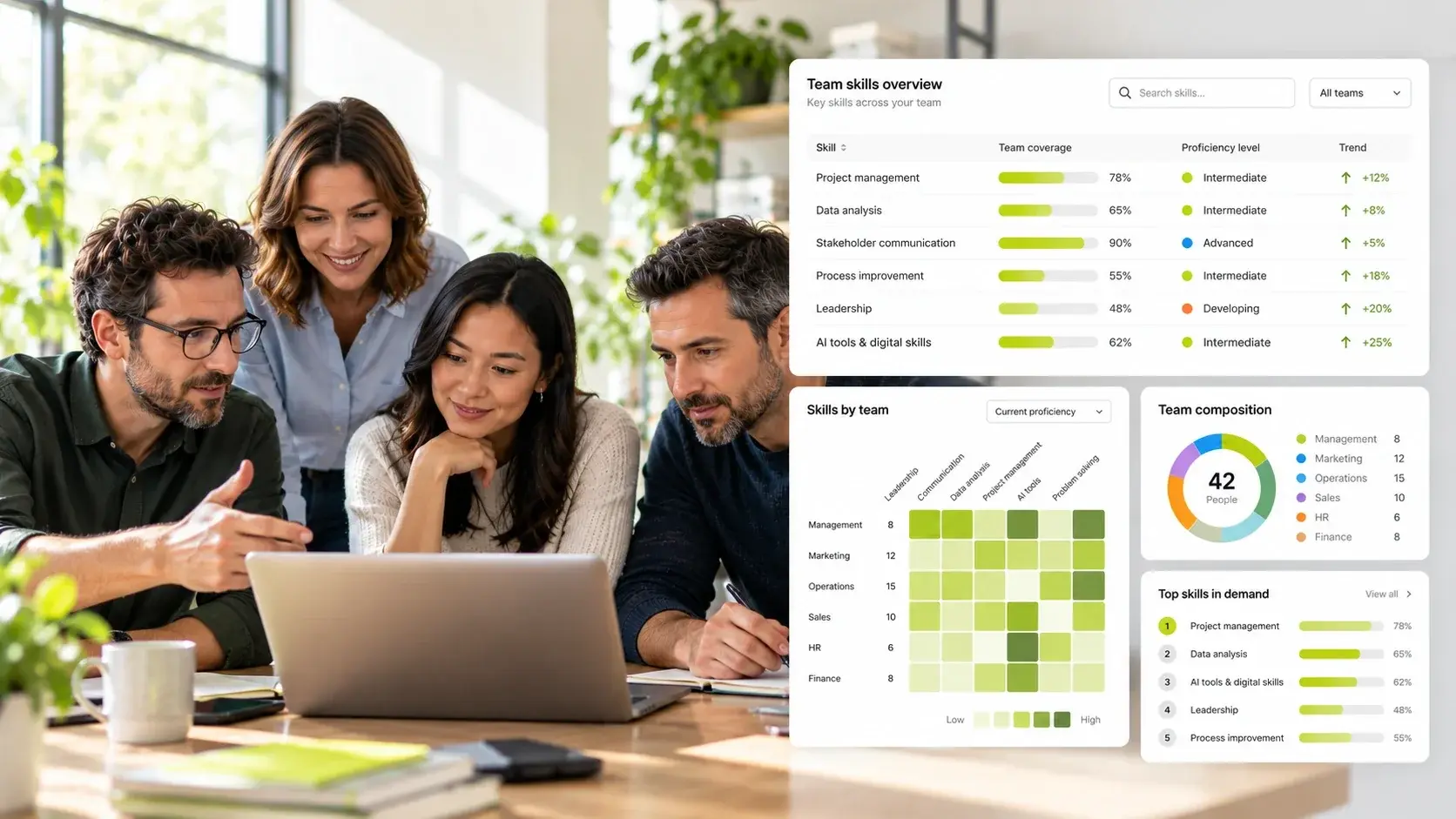
Professionals discussing team skills and talent insights in a bright office

Skills & Talent Insights

Know Your Team’s Strengths. Discover the Talent You Already Have.

You know the people on your team. But do you know the full range of skills they bring to work, and which roles they could grow into?

hilighter brings your people’s skills together in one structured view. Explore skills matrices, compare proficiency levels with role requirements, uncover overlooked strengths and see where development deserves attention.

The Right Skills May Already Be on Your Team. Can You See Them?

Ask most managers what their team is good at and they’ll answer. But ask who has data analysis experience, who could take on a project role, or which capabilities depend on a single expert, and the picture gets less clear.

Information is scattered across spreadsheets, CVs, job descriptions and managers’ memories. When a new responsibility appears, organizations often start looking outside, while the relevant capabilities already exist inside.

Hidden strengths

Valuable skills go unnoticed or unused.

Unclear gaps

Missing capabilities become visible only when they are urgently needed.

Overlooked talent

People are seen through their job title, not their skills.

Your next talent opportunity may not require finding someone new. It may require seeing someone differently.

See Your Team More Clearly. Make Better Talent Decisions.

  1. 01

    Discover strengths across your team

    Understand which skills exist and where expertise sits.

  2. 02

    Look beyond job titles

    See what employees know beyond their formal responsibilities.

  3. 03

    Identify gaps before they become problems

    Compare capabilities with role requirements and identify priority areas.

  4. 04

    Support informed decisions

    Give managers a clearer basis for role and development discussions, without reducing people to a score.

One Clearer View of Your People’s Skills and Potential

  • Explore capabilities with a skills matrix

    Compare employee skills, proficiency levels, and whether requirements are met, in one structured view.

  • Focus on the teams that matter

    Filter by team, skill set and individual to focus on what you need.

  • Match people to roles

    Compare an individual’s documented skills with the essentials of a role and see strengths and gaps.

  • Turn gaps into development priorities

    Missing skills may point to the next development step rather than immediate disqualification.

From Scattered Information to Talent Insights

  1. 1

    Bring it together

    Bring your people, roles and skills together in a structured environment.

  2. 2

    Explore

    Explore capabilities using the skills matrix and team and skill filters.

  3. 3

    Compare

    Compare people’s skills with role requirements to spot strengths and gaps.

  4. 4

    Discuss

    Discuss development priorities and future responsibilities with the people involved.

Less guesswork, greater clarity and a better foundation for talent decisions.

Practical Example: A New Project Without an External Search

A 15-person team launches a digital project that needs process improvement, data analysis, stakeholder communication and project coordination.

The skills matrix shows strong process-improvement contributors, two people with data-analysis experience and a gap in advanced digital tools. Comparing one employee’s skills with the project coordinator role reveals communication and organization strengths, with planning and risk management to develop. The manager plans targeted development and an informed role discussion instead of a premature external search.

This example is illustrative. What you see depends on the quality of the skills information recorded, and a role match is only one indicator: experience, motivation and performance still matter.

Built for Managers Who Need Clarity, Not More Administration

Team leaders

See strengths and gaps across people without fragmented records.

HR

Link existing talent to evolving role needs and support consistent development discussions.

SME leaders

Make better use of the people you already have, without large HR overhead.

Employees

Understand your strengths and the skills to build for new responsibilities.

Your Team Is More Than the Sum of Its Job Titles.

Two people with the same role can have very different abilities. One brings analytics from a previous job; another has strong leadership.

Visibility creates better conversations and supports employees’ growth. It does not replace management judgment.

FAQs

What are skills and talent insights?

A structured view of the skills and proficiency levels across your team, compared with what each role requires.

What is a skills matrix?

A cross-reference of people, skills and proficiency levels that makes them easy to compare.

How is it different from job and skills mapping?

Mapping defines the skills each role requires and captures each person’s skills. Insights bring them together so you can compare people, teams and roles.

Does a high role match mean someone is the best candidate?

No. It informs judgment rather than automatically selecting anyone.

Can this identify training priorities?

Skills gaps give useful guidance for training priorities, but they are not an automatic training prescription.

Does it replace manager assessments?

No. The quality of the input, manager assessments and evidence remain essential.

Is hilighter suitable for SMEs?

Yes. Pricing depends on the number of job roles, not employees, and the Free plan includes up to 3 job roles with all Core features. See the Pricing page.

Build a Stronger Team by Understanding the One You Have.

Discover strengths. Match people to roles. Focus your development decisions.