
hilighter Logohilighter Logo
EN
Get Started
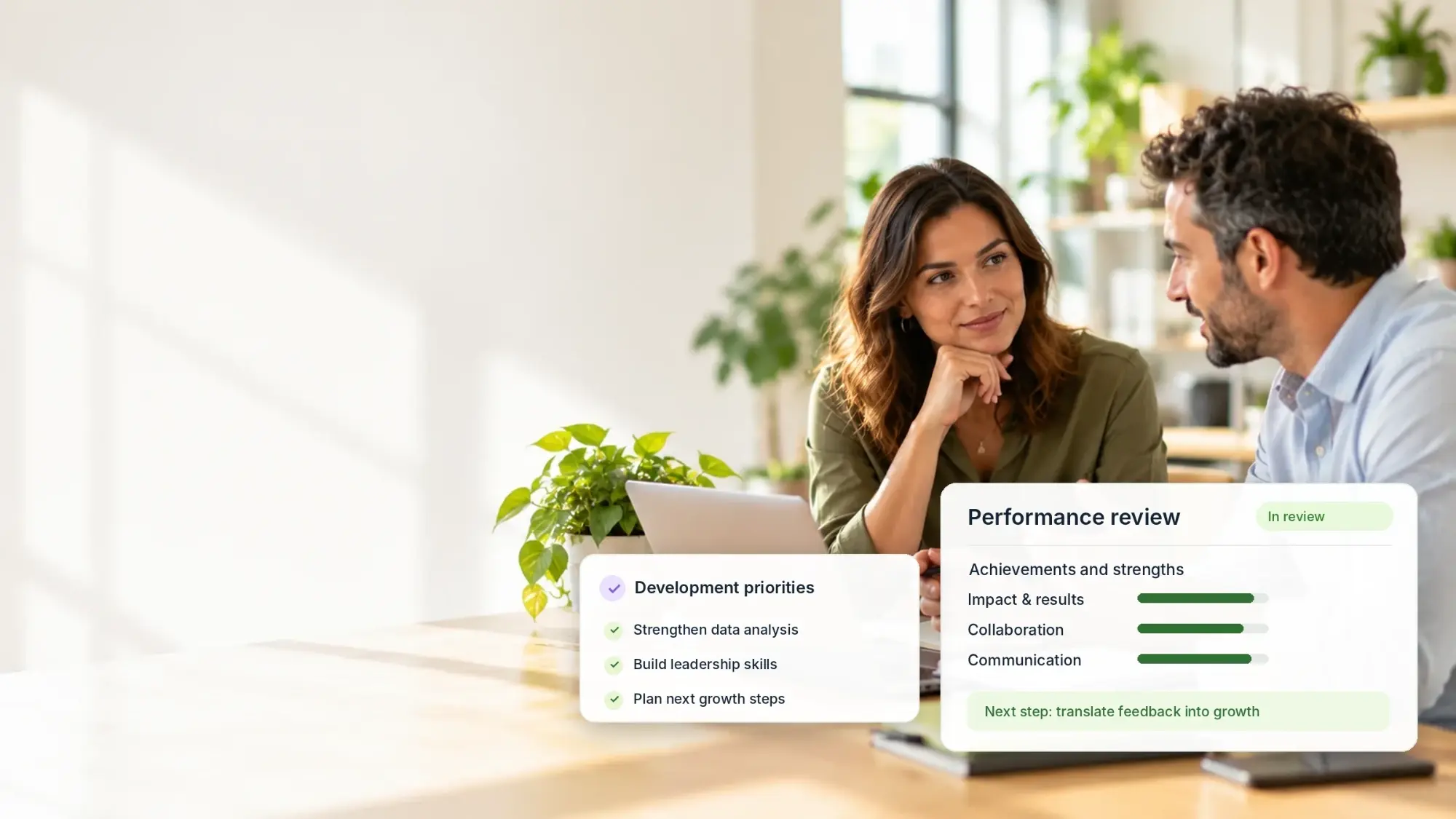
Employee and manager in conversation at a desk, with illustrative cards of a performance review and development priorities (not a product screenshot)

Employee Performance Reviews

Premium module · Coming soon

Make Performance Conversations More Meaningful.

The most useful performance review isn’t just a rating of the past. It’s an honest conversation about what someone has achieved, how their capabilities have grown, and what they need to succeed next.

The Employee Performance Reviews module is designed to bring accomplishments, skills information, feedback and development priorities into a clearer, more constructive process. Recognize contributions. Discuss growth. Agree on next steps.

A Year of Work Deserves More Than a Single Score.

Many employees experience reviews as an annual form to complete rather than a meaningful discussion. Managers struggle to remember what happened months earlier. Employees may feel their best contributions were forgotten or that the criteria are unclear. And even when a review takes place, it may end without a practical development plan.

Achievements get lost

The important work someone did isn’t always documented in one place.

Feedback feels disconnected

Comments aren’t consistently tied to role expectations, demonstrated skills or outcomes.

Next steps remain vague

A completed review can still leave employees uncertain about their development.

The value of a review is not the form itself. It’s the clarity and action it creates.

Turn Reviews into Better Conversations

  1. 01

    Recognize achievements and contributions

    Bring real outcomes, projects, responsibilities and meaningful work into the conversation, with supporting evidence where appropriate.

  2. 02

    Discuss skills alongside performance

    Distinguish results delivered from capabilities developed, and reflect on strengths and gaps without reducing someone to a single number.

  3. 03

    Bring in relevant feedback

    Use manager and employee perspectives, and other appropriate feedback, keeping the evaluation fair, contextual and understandable.

  4. 04

    Connect performance with growth

    Agree on a few relevant skills and development actions that support responsibilities and goals.

  5. 05

    Look ahead, not only backward

    Make next steps and follow-up part of the conversation rather than an afterthought.

From Looking Back to Moving Forward.

  • Prepare together

    Bring together role expectations, notable achievements, recent responsibilities, existing skills evidence and relevant feedback.

  • Have a meaningful discussion

    Recognize achievements, explore challenges, acknowledge different perspectives and talk about what the work actually required.

  • Agree on development priorities

    Identify practical goals, support, learning or stretch assignments, and what good progress would look like.

  • Follow up

    Revisit the agreed priorities over time and adapt as responsibilities or circumstances change.

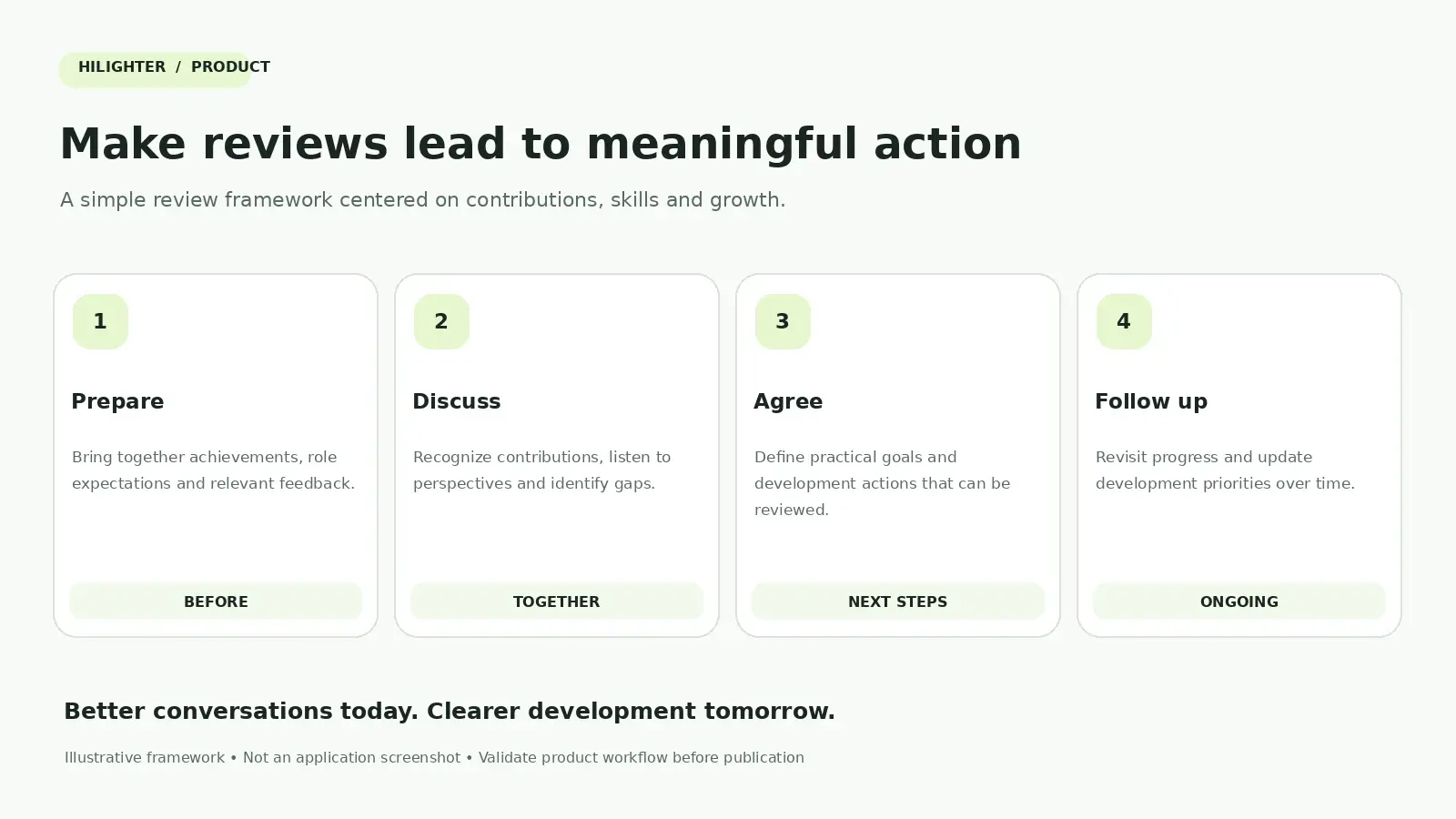
This is the proposed review approach. The exact workflow will be confirmed when the module is released.

Four steps to make reviews lead to meaningful action: prepare, before the review, by bringing together achievements, role expectations and relevant feedback; discuss, together, by recognizing contributions, listening to perspectives and identifying gaps; agree on next steps, with practical goals and development actions that can be reviewed; follow up, ongoing, by revisiting progress and updating development priorities over time.
Illustrative framework, not a screenshot of the application.

Review More Than Output Alone

  1. 1

    Results & contributions

    What was achieved? What value was created? What circumstances and resources influenced the outcomes?

  2. 2

    Skills & growth

    Which relevant skills were applied or developed? What evidence supports those conclusions?

  3. 3

    Feedback & collaboration

    What feedback is specific, constructive and relevant to actual responsibilities?

  4. 4

    Goals & development

    Which realistic priorities should be agreed next, and how can the organization support them?

A useful review recognizes performance in context, not simply a checkbox score.

Practical Example: A Review That Leads Somewhere

Alex works in customer operations and completed several initiatives during the year. A traditional review might focus on a broad performance score. In a skills-informed review, Alex and the manager look at the customer process improvement Alex delivered, the challenges handled, the role expectations and the skills demonstrated. They also discuss opportunities to improve analytical reporting and leadership communication.

Together they agree on clear development actions: contribute to a cross-functional analytics project, practice presenting results, and hold a follow-up discussion about progress. The aim isn’t to manufacture a positive score; it’s to recognize real work and give improvement a realistic next step.

Illustrative example. It does not mean that hilighter automatically manages goals, schedules meetings or gathers evidence.

Support People, Not Just Review Cycles

Employees

A clearer opportunity to discuss contributions, challenges and aspirations, with more specific development conversations.

Managers

A more structured way to prepare fair, relevant discussions about work, strengths and improvement.

HR & L&D

A shared framework connecting individual reviews with skills growth and development priorities, without reducing performance to a score.

Leadership

Better visibility into how people are supported and developed, with appropriate privacy and governance.

Important Principles for Trust

Reviews affect careers. Employees should understand what is considered, who can access the information, how inaccurate facts can be challenged, and when AI only assists while a person makes the judgment.

hilighter favors evidence and constructive dialogue over hidden scoring. Better review conversations are built on useful evidence, clear expectations and human judgment.

FAQs

What is a skills-based performance review?

A review that considers achievements and role outcomes alongside relevant capabilities, demonstrated growth and development needs, rather than focusing only on a generic rating.

How is it different from skills assessments?

Skills assessments, such as Manager Assessments and Advanced Skills Assessments, look at evidence of specific competencies. Performance reviews discuss broader contributions, results, feedback and future development.

Will hilighter rate employees automatically?

No. A performance review stays a human-led, contextual conversation. The module is not designed to score or rank people automatically.

Can employees contribute their own perspective?

Employee involvement is part of the proposed review approach. The exact self-review and comment features will be confirmed at release.

Can training results and skill validations inform a review?

Relevant evidence can enrich the discussion, subject to your organization’s policies and access rights.

Does a review automatically determine pay or promotion?

No. Those decisions follow your organization’s own rules and accountable human judgment.

How often should reviews take place?

A formal cycle can be complemented by regular check-ins. The right cadence depends on your organization.

Is it included in the Free plan?

No. Employee Performance Reviews is a Premium module in preparation, planned as an optional extension of paid plans.

Make Every Review a Starting Point for Growth.

Recognize the work people have done. Talk openly about strengths and opportunities to improve. Turn the conversation into priorities that matter.